May 112014
 
20140512-145604.jpg

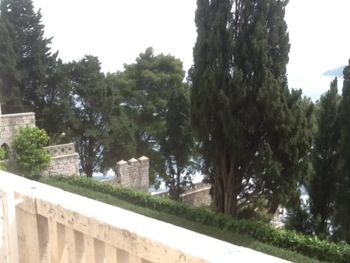
Off Our Balcony

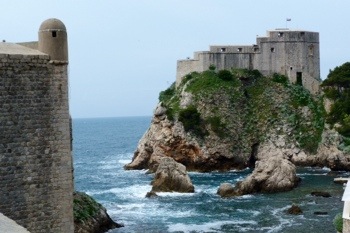
At the extreme south of Croatia the city of Dubrovnik (Latin: Ragusa) was established and thrived on maritime trade. It became the only city-state in the Adriatic to rival Venice in the Middle Ages. Supported by its wealth and skilled diplomacy, the city achieved a remarkable level of development during the 15th and 16th centuries. Once an independent republic, it managed to survive many centuries, constantly under territorial threats from the mighty Ottoman Empire and Venice.

Historically Dubrovnik has been a center of the development of the Croatian language and literature, home to notable poets, playwrights, painters, mathematicians, physicists and other scholars. Early in the 19th century, it was discovered by celebrities as a place to be seen. George Bernard Shaw once said that “those who seek paradise on Earth should come to Dubrovnik and find it”. Royalty, presidents and diplomats have all favored the city. The late Pope John Paul II was a fan of Dubrovnik and was even made an honorary citizen.

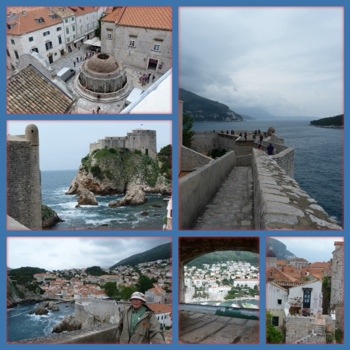
Dubrovnik remains a stunningly intact walled city easily accessible on the Adriatic Sea coast which can be overrun by tourists pouring off the luxury tour ships in the harbor.
20140513-163137.jpg

Off the Rampart Walls

20140513-163755.jpg

On the Strada et al

20140513-164118.jpg

Yet Another Gorgeous Day

20140513-164148.jpg

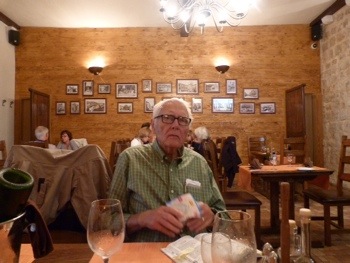
Savoring a Great Slow Foods Meal–Another Travel Hint From Susan S
20140513-164313.jpg

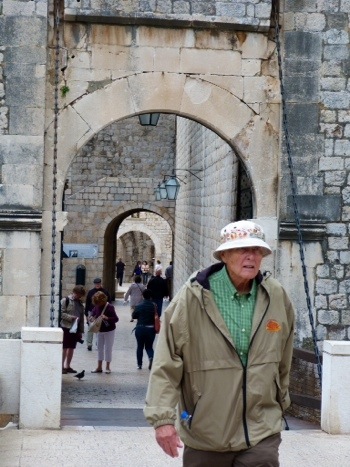
Departing Dubrovnik
May 102014
 

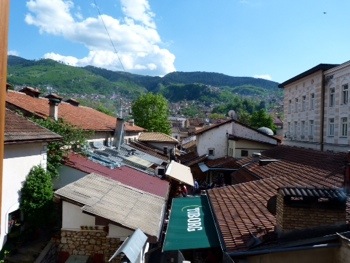
Wikipedia travel invitingly describes Sarajevo as one of the most historically interesting and varied cities in Europe. Set in a mountain valley, it is astounding to look out over the city and realize that for 1,300 days between 1992 and 1995 the city was under a medieval-style siege determined to cut off food, water, electricity and telephones. It was the longest lasting siege in modern European history. Then its population was about 300,000 and today it is still not a huge city.
We came in after a very long drive out of Bulgaria, across Serbia and into Bosnia finally climbing down alpine mountains and through narrow valleys into a city under lock down traffic control–the City Hall was opening after renovation and repair from the siege–all of Sarajevo was turned out to celebrate!! Redirected by the police and helped many times by locals we are in and settled surrounded by the buzz of celebration.

For the most part, the city has physically recovered from the majority of the war damage caused by the Yugoslav Wars. About 400.000 people live in its very livable, vibrant and busy urban areas. The bridge in Sarajevo is directly across the street from where Archduke Franz Ferdinand was killed by a Serbian assassin, setting in motion the beginning of and World War I.

20140510-074553.jpg 20140510-074504.jpg 20140510-074528.jpg 20140510-074628.jpg
20140510-074429.jpg

Last Stretch of Road into Sarajevo

20140510-162332.jpg

The View from our Room

May 062014
 

Today we drove from Bucharest to Sofia (София), capital of Bulgaria and is its largest city. We crossed the brown Danube and easily negotiated the border crossing. The drive was primarily through vast and thriving agricultural valleys with nestled villages and small towns some distance from the highway. The entire 250 miles was unblemished by industry or the urban sprawl that we had noticed in Romania. Development or industrial presence seems to be specifically confined to planned areas which for such small pocket sized country on the quilt of Europe seems wise.

Sofia is a bustling and busy government capital as well as the economic heart of the country. According to locals it is not a tourist destination. The blend of 19th century European and Communist-style architecture sharing neighborhoods with beautiful onion-domed orthodox churches and Ottoman mosques and entrenched Red Army monuments has a kind of shabby charm. The central government and historic district is dotted with lovely parks enjoyed by families and elders. The people hurrying along the busy streets are frequently very stylishly dressed in the latest American and European fashions and appear healthy. We are staying in the heart of the old city in a hotel that is built upon 4th century A.D.Roman ruins evident in open spaces in the hotel lobby and restaurant as an archeological site.

20140507-165000.jpg

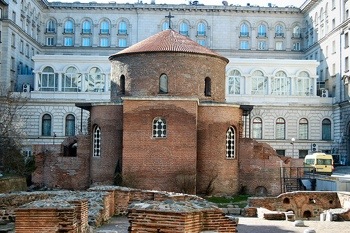
Church of St. George

20140507-165023.jpg

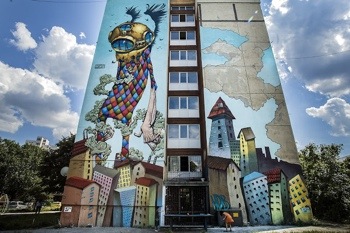
Bozko Mural

20140507-164754.jpg

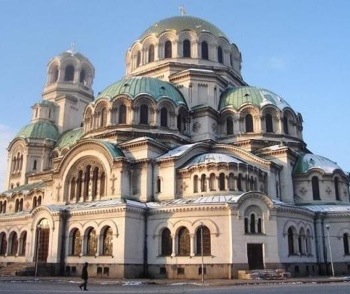
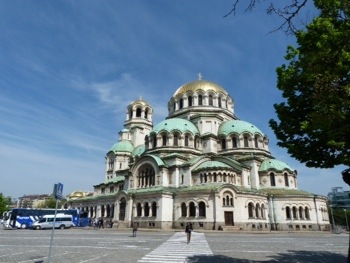
Alexander Nevsky Cathedral

20140508-134124.jpg

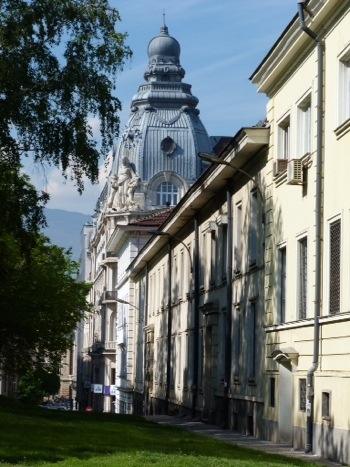
Around the Corner from our Hotel

20140508-134653.jpg

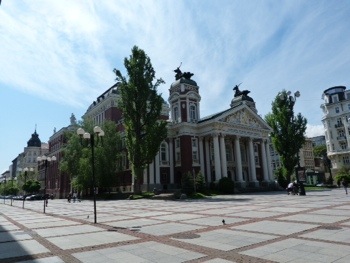
National Theater

20140508-134734.jpg

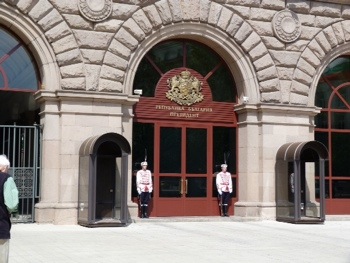
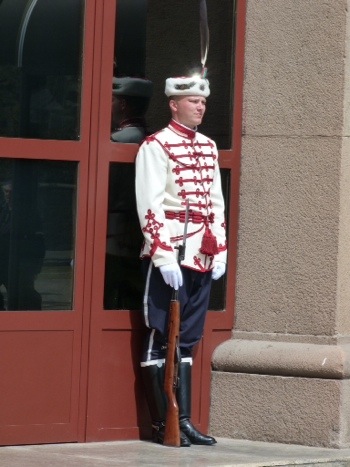
Guards Outside the President’s Building

20140508-134800.jpg

Guards Change on the Hour

20140508-134824.jpg

St. George Rotunda Began as a Roman Bath

20140508-134916.jpg

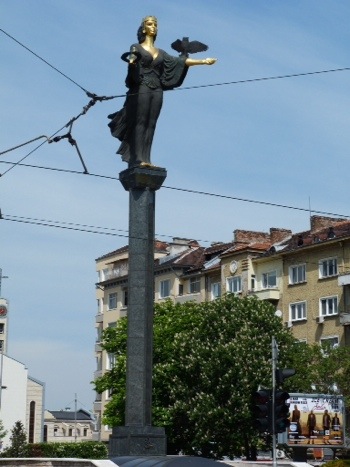
St. Sofia Patroness of Sofia

20140508-134938.jpg

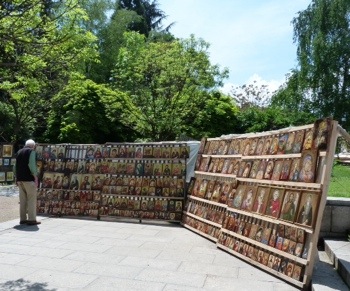
A Icon Shopper

20140508-134957.jpg

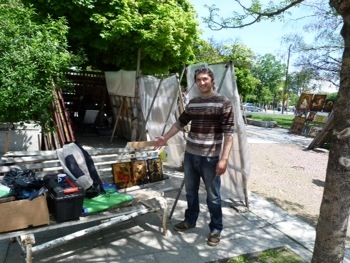
Borisloff, Icon Painter and Vendor

20140508-134506.jpg

Sun Glinting of the Domes of the Memorial Church

20140508-134423.jpg

Alexander Nevski’s Memorial Church Cracker Barrell

May 062014
 

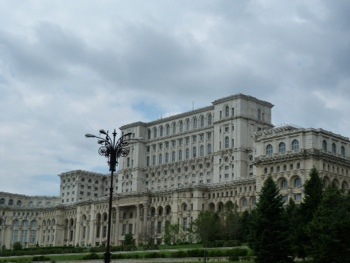
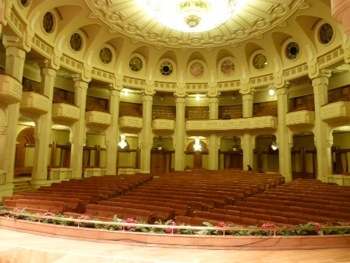
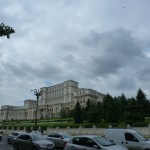
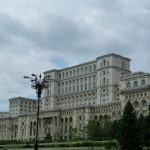
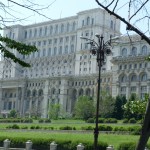
The Palace of Parliament, second in size only to the Pentagon, was our destination today. Begun in 1984 at a cost of 3.3 BILLION Euros Nicolae Ceauśeau had vast areas of invaluable architectural treasures razed to make for this grandiose pretentious madness of a monument to himself. The 330,000 square meters remains unfinished but is in part occupied the two Houses of Parliament and their supporting bureaucracies.

20140506-194210.jpg

The Palace

20140506-194253.jpg

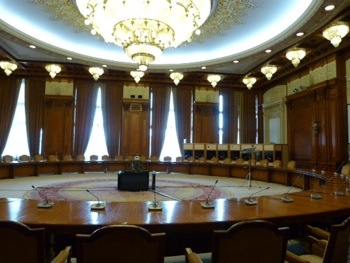
A Committee of Sixty Seats

20140506-194457.jpg

The Theater

20140506-200526.jpg

One of Many Enormous Reception Spaces

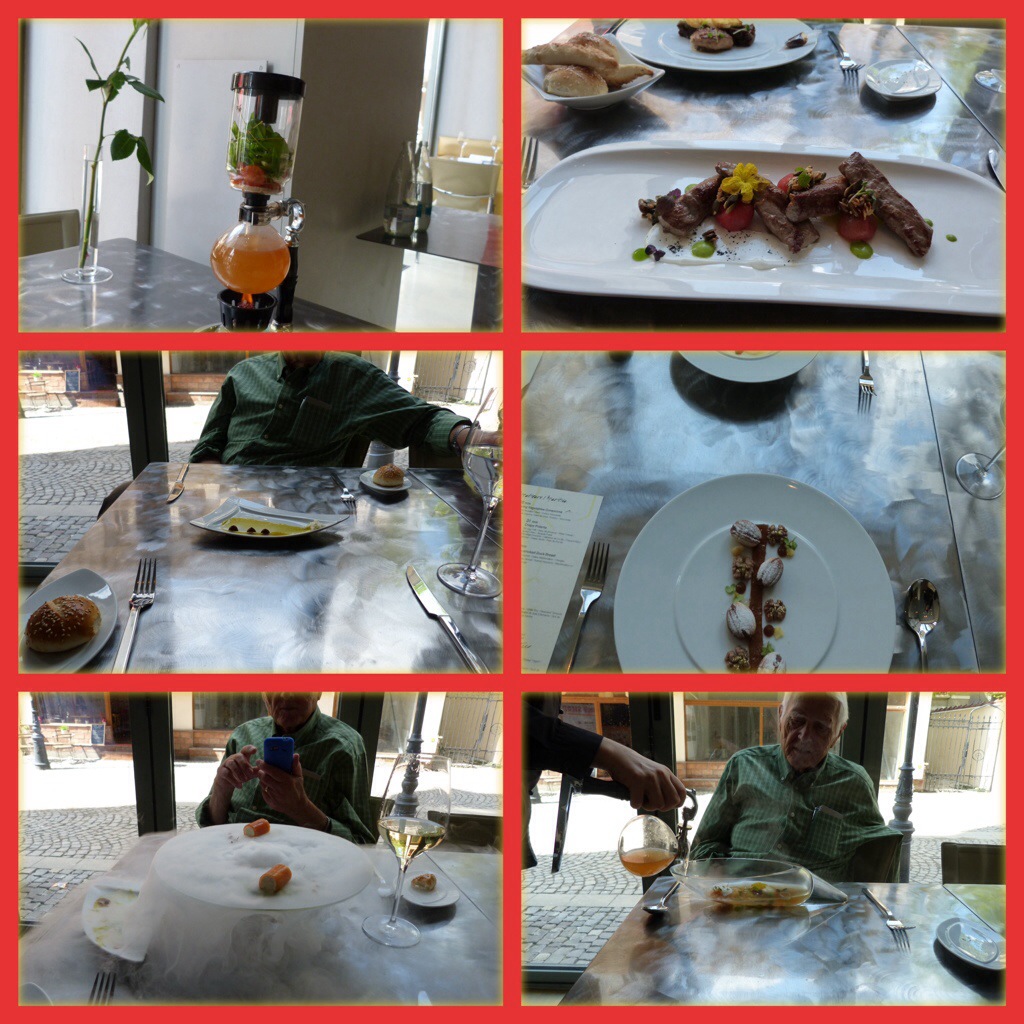
Following our 3 hour tour of the Palace we had a 3 hour dinner that was without question the most amazing “molecular” food experience of my life.

20140506-201657.jpg

May 042014
 

20140506-191345.jpg

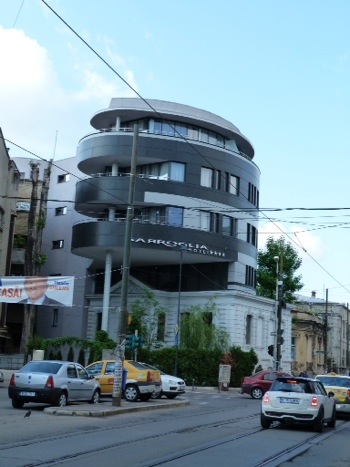
Our Sarroglia Hotel

20140505-194011.jpg

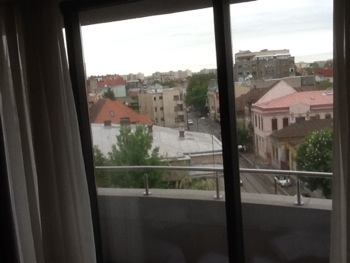
“A Room With a View”

20140505-194024.jpg

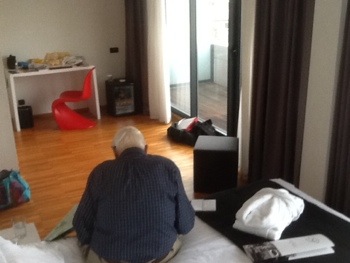
Whose That Sitting On My Bed?

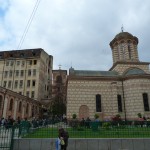
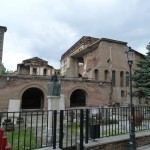
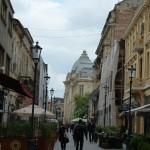
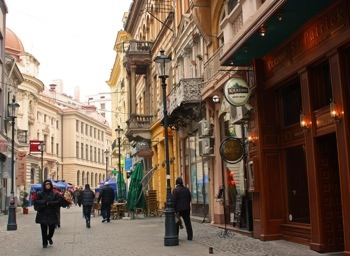
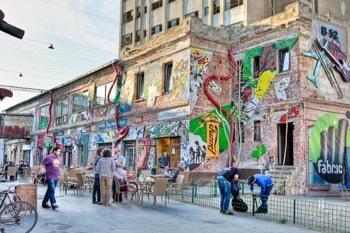
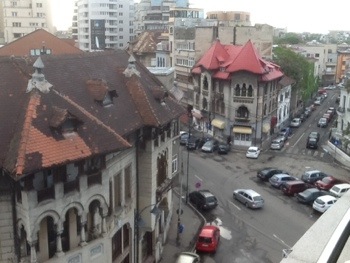
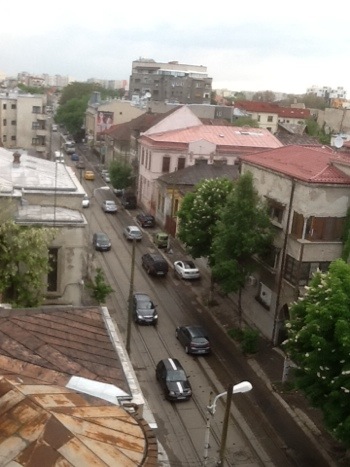
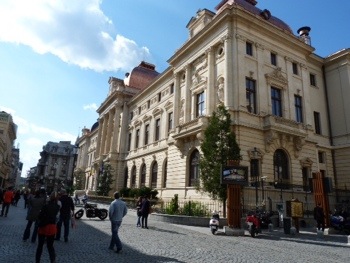
Bucharest is considered the gateway into Romania and is a flourishing city with many large infrastructure projects transforming every district. Once known as “The Little Paris,” Bucharest is reinventing herself and today it has become a very interesting mix of old and new that has little to do with its initial reputation. Finding a 300 year old church, a steel-and-glass office building and Communist-era apartment next to one another in the same block is a common sight. We are staying in a perfect example–a recently opened very modern four story hotel in the Lipscani area which is literally rising out of a ancient building foundation. We overlook all–“beyond Baroque” churches and building converted to embassies as well as the gloomy blocks of communist era apartments.

To get here, we came over the winding mountainous roads through little villages, some prosperous and some very destitute with no clear explanation of why,

Bucharest in recent years, has cultivated a sophisticated, trendy, and modern receptiveness in an attempt to compete with other European capitals. The city has benefited from an economic boom helped in part by EU grants that have assisted in rebuilding neglected sectors such as the historic Lipscani area. Young Romanians in particular seem to be inhaling the pitch of shiny foreign advertisers all heavily hawking their wares: mobile phones, prestige brand cars, cosmetics and clothes. The fitosi the newly rich seem obsessed with gadgetry and appearance. Yet after watching their parents suffering limited choices, paranoia and oppression it is no wonder that these young educated Romanians are living a carpe diem creed.
Conversations with young articulate well educated adults such as our Palace tour guide express misgivings about the current government, the level of corruption and the loss of a middle class. It all sounded very familiar.
20140506-070510.jpg

20140506-070707.jpg

20140506-070724.jpg

20140506-081202.jpg

20140506-081235.jpg

20140506-202055.jpg

20140506-202219.jpg